
Kingdom Worker Ministries Blog
Recently, we discussed the ministry of reconciliation; the renewing of that relationship that existed with the original man before his fall from God’s grace. In that discussion we found that “God was in Christ reconciling the world unto himself” (II Corinthians 5:17-19). As God reconciled us back unto himself, he also did one incredible thing for us that many are not aware of; “He no longer imputed our sins against us.” Did you hear what we just said? Almighty God, the one many believers call “Abba Father,” no longer counts our sins against us. How incredible is that? But how is this possible?
“So by the obedience of one shall many be made righteous” (Romans 5:19). “…by man came also the resurrection of the dead. … even so in Christ shall all be made alive” (I Corinthians 15:21-22).
By one man’s obedience, many have been given the opportunity to be made righteous. By one man’s obedience, many have been given the opportunity to be made alive.
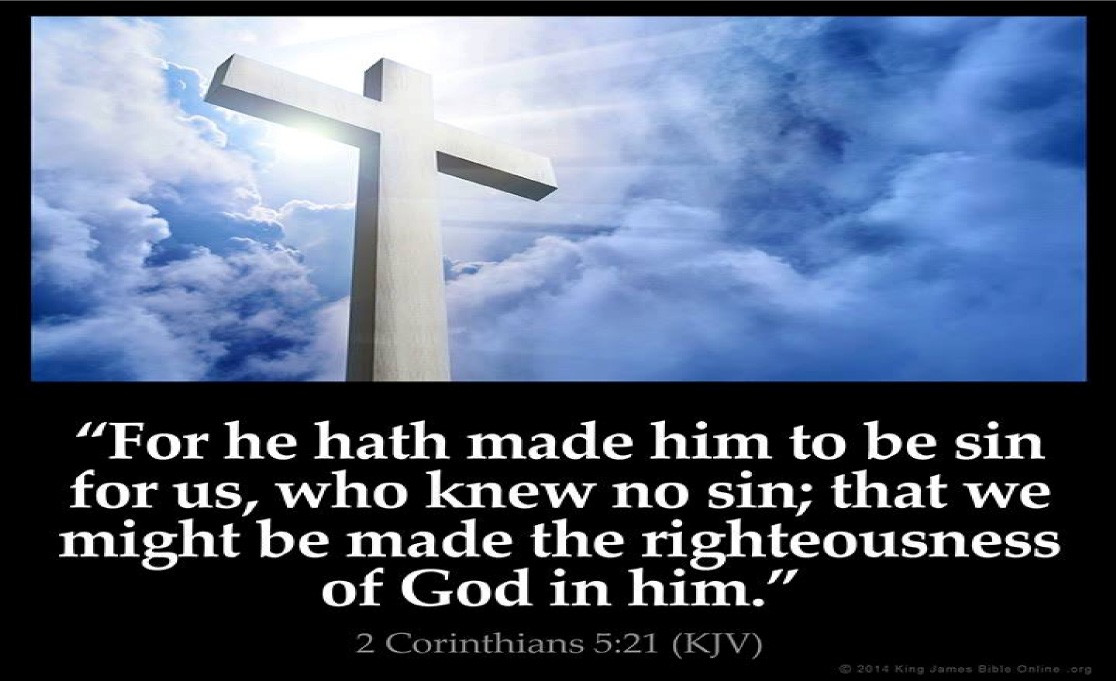
There is an old cliché (with some variation) that people in many Christian circles repeatedly say, “I’m just an old sinner, saved by grace.” The problem is that they do not realize that this is actually “an untrue confession.” Yes, we said “an untrue confession.” Right this very minute someone is saying to themselves, “But aren’t we all sinners?” To that, we would have to answer “Yes” and “No.” We know it sounds a little confusing and it may sound like we are playing on the wording, but let us try to explain.
In our most recent message, we mention how important the words that we speak are. We mentioned that we have the ability to choose between life and death, blessings and cursings through the words that we speak (Proverbs 18:21). We even mentioned that our very salvation hinged upon words that we speak or confess not to forgo the required believing in one’s heart (Romans 10:9-10). However, keep these thoughts in mind, we shall return to them shortly.
Not long ago, we talked about the most powerful system in the world and we mentioned that we had been given “the power” to control and “the authority” to command this very system. We even mentioned how important the words that we spoke were to this powerful system because they are the keys that control this system. We mentioned that we have the ability to choose between life and death through the words that we speak. In this system, we find that our blessings and cursings are completely based on and controlled by what we say.
“Death and life are in the power of the tongue: and they that love it shall eat the fruit thereof” (Proverbs 18:21).
We found that our very salvation hinges upon words that we speak or confess not to forgo the required believing in one’s heart.
“That if thou shalt confess with thy mouth the Lord Jesus, and shalt believe in thine heart that God hath raised him from the dead, thou shalt be saved. For with the heart man believeth unto righteousness; and with the mouth confession is made unto salvation” (Romans 10:9-10).

GIVE THANKS TO THE LORD
“The priests then withdrew from the Holy Place. All the priests who were there had consecrated themselves, regardless of their divisions. All the Levites who were musicians—Asaph, Heman, Jeduthun and their sons and relatives—stood on the east side of the altar, dressed in fine linen and playing cymbals, harps and lyres. They were accompanied by 120 priests sounding trumpets. The trumpeters and musicians joined in unison to give praise and thanks to the Lord. Accompanied by trumpets, cymbals and other instruments, the singers raised their voices in praise to the Lord and sang: ‘He is good; his love endures forever.’ Then the temple of the Lord was filled with the cloud, and the priests could not perform their service because of the cloud, for the glory of the Lord filled the temple of God” (II Chronicles 5:11-14 NIV).

Worry is not a good thing. It is definitely not something that is of God. We are told that we really shouldn’t worry about anything because God takes care of everything.
“So my counsel is: Don’t worry about things—food, drink, and clothes. For you already have life and a body—and they are far more important than what to eat and wear. Look at the birds! They don’t worry about what to eat—they don’t need to sow or reap or store up food—for your heavenly Father feeds them. And you are far more valuable to him than they are. Will all your worries add a single moment to your life? And why worry about your clothes? Look at the field lilies! They don’t worry about theirs. Yet King Solomon in all his glory was not clothed as beautifully as they. And if God cares so wonderfully for flowers that are here today and gone tomorrow, won’t he more surely care for you, O men of little faith? So don’t worry at all about having enough food and clothing. Why be like the heathen? For they take pride in all these things and are deeply concerned about them. But your heavenly Father already knows perfectly well that you need them, and he will give them to you if you give him first place in your life and live as he wants you to. So don’t be anxious about tomorrow. God will take care of your tomorrow too. Live one day at a time” (Matthew 6:25-34 TLB).
Did you know that the greatest miracle of all was what God did for us through Jesus Christ?
“For God so loved the world, that he gave his only begotten Son, that whosoever believeth in him should not perish, but have everlasting life. For God sent not his Son into the world to condemn the world; but that the world through him might be saved. He that believeth on him is not condemned: but he that believeth not is condemned already, because he hath not believed in the name of the only begotten Son of God” (John 3:16-18).
Love and redemption, these are the greatest miracles of all and this is what God gave us through what Jesus Christ did. Because of his love for the world, God made it possible for the world to be saved, through the sacrifice of his only begotten son. Yes, God loves you just that much. God loves us just as much. God loves everyone just as much, which is what the scripture means when it says, “For God so loved the world.” And because he loved everyone just so much, God made it possible for the entire world to be saved, through the sacrifice of his only begotten son. God’s love and his redemption does not pertain to a particular person, to a particular people group, or even to a particular nation of people. God loves everyone and he did not exclude anyone. Everyone is included. That means that regardless of what you may or may think of yourself, God loves you, unconditionally.

“There is one body, and one Spirit, even as ye are called in one hope of your calling; one Lord, one faith, one baptism, one God and Father of all, who is above all, and through all, and in you all” (Ephesians 4:4-6).
Scripture tells us there is one body and one Spirit, one Lord, one faith, and one baptism. Should there be any variations when we are told through scripture that there is only one? Should there be variations amongst the members in the one body, “the so-called body of Christ?” Believers are taught that each of us have different assignments, but does this mean that the members of the one body have different objectives?
Here is an interesting statistic, discovered a few years back while doing some research: there are more than 103.5 million members in more than seventy-five different church bodies that make up “the so-called one body,” the body of Christ. But if there be one body, shouldn’t these members of this body at least have the same objective, the same vision, and the same mission before them? What about their knowledge of Christ, shouldn’t that be similar amongst the members? If not, does this mean that the members are permitted to have varied beliefs as to who Christ is, what he is and where he comes from? If there be only one Lord, shouldn’t the more than 103.5 million members in the more than seventy-five different church bodies that make up his “so-called one body” be in agreement about him? One would surely think so, unfortunately, this be not the case.
Recently, we discussed how understanding the benefits of prayer would help us to understand why we should pray. We discussed the same model that Jesus showed to his disciples when they asked him to teach them to pray as John taught his disciples to pray. The very first thing Jesus did was to tell them to revere the name of the Father and to honor him for his holiness. Jesus said, when we pray, we should say, “Our Father which art in heaven, Hallowed be thy name.”
We now know that when we come before God, we are to enter into his gates with great thanksgiving and enter into his courts with praise (Psalm 100:4). We know that when we pray, we need to give praise to him, to speak of his glories and of his grace, to boast of his kindness, to give thanks and to bless his holy name, and to exalt his holy name. When we pray, we need to pray primarily for these reasons, but these are not the only reasons we need to pray. Praying is a process and for effectual prayer, we need to follow the guidelines that Jesus showed his disciples.
“And it came to pass, that, as he was praying in a certain place, when he ceased, one of his disciples said unto him, Lord, teach us to pray, as John also taught his disciples. And he said unto them, When ye pray, say, Our Father which art in heaven, Hallowed be thy name. Thy kingdom come. Thy will be done, as in heaven, so in earth (Luke 11:1-2).

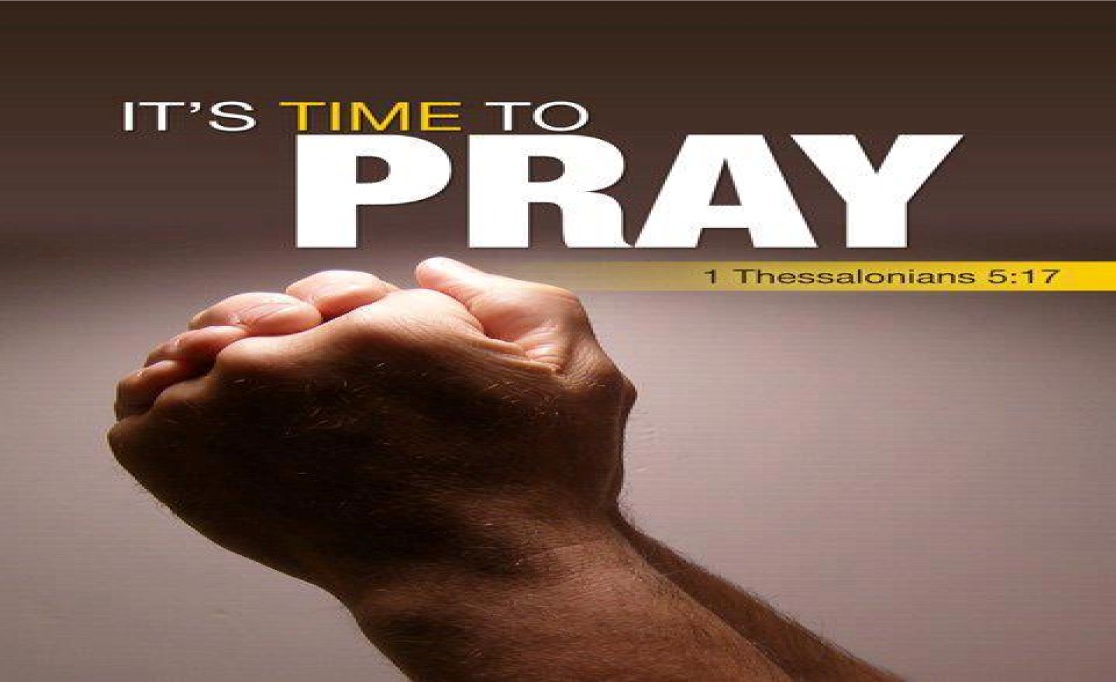
Understanding the benefits of prayer will help us to understand why we should pray. Most people, believers and non-believers alike, only pray in a time of need, when things are out of their control. The problem is that prayer should be the first thing you, as a believer, do every morning and the last thing you, as a believer, do before you go to sleep. This is not to say that these are the only times that you should pray because the scripture say that we should pray always, without ceasing.
“Pray without ceasing. In every thing give thanks: for this is the will of God in Christ Jesus concerning you” (I Thessalonians 5:17-18).
We are told to pray without ceasing, but did you notice what else we are to do when praying? Scripture tells us that we should give “thanks in everything.” According to this passage, prayer is not just something we do in our hour of need, but something that we should constantly do, constantly giving thanks to God in every situation, because “this is the will of God for us.”
“And it came to pass, that, as he was praying in a certain place, when he ceased, one of his disciples said unto him, Lord, teach us to pray, as John also taught his disciples. And he said unto them, When ye pray, say, Our Father which art in heaven, Hallowed be thy name. Thy kingdom come. Thy will be done, as in heaven, so in earth (Luke 11:1-2).

A registered 501(c)(3) nonprofit organization
EIN 84-2866702.
Office Hours:
Meetings available upon request.
Get in Touch
Phone:
(540) 382-9132
Mailing Address:
Kingdom Worker Ministries
P. O. Box 33
Christiansburg, VA 24068-0033