
Kingdom Worker Ministries Blog
We have previously talked about this battle that we are in, where we wrestle against the evil rulers of this unseen world, which includes the mighty satanic beings, the great evil princes of darkness, and a huge number of wicked spirits (Ephesians 6:12). This battle takes place in the arena of our mind and is unavoidable, knowing no bounds, no gender, no age, no race, and no religion. It attacks everyone. As we see the daily struggles of those who succumb to poverty, sickness, and death, we know this war to control our soul involves tactics such as depression, fear, discouragement, low self-esteem, worry, anxiety, confusion, and doubt. What many do not know is that we actually have the power to control these evil rulers of the unseen world.
“For though we walk (live) in the flesh (in this body), we do not war (fight) after (according to) the flesh (human standards)” (II Corinthians 10:3). “(For the weapons of our warfare are not carnal, but mighty through God to the pulling down of strong holds;) casting down (destroying) imaginations (false arguments) and every high thing that exalteth itself against the knowledge of God bringing into captivity every thought to the obedience of Christ” (II Corinthians 10:4-5).
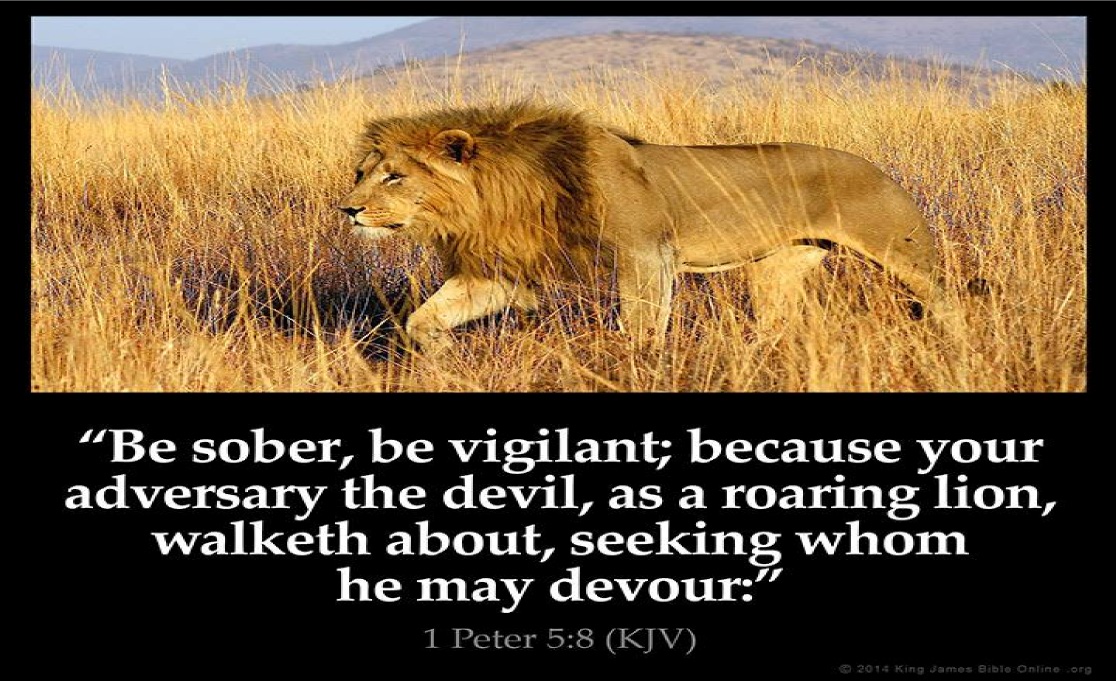
Most of you are familiar with “The Parable Of The Sower.” Jesus explains the parable to his disciples this way.
“And his disciples asked him, saying, What might this parable be? And he said, Unto you it is given to know the mysteries of the kingdom of God: but to others in parables; that seeing they might not see, and hearing they might not understand. Now the parable is this: The seed is the word of God. Those by the way side are they that hear; then cometh the devil, and taketh away the word out of their hearts, lest they should believe and be saved. They on the rock are they, which, when they hear, receive the word with joy; and these have no root, which for a while believe, and in time of temptation fall away. And that which fell among thorns are they, which, when they have heard, go forth, and are choked with cares and riches and pleasures of this life, and bring no fruit to perfection. But that on the good ground are they, which in an honest and good heart, having heard the word, keep it, and bring forth fruit with patience” (Luke 8:9-15).

How awesome is God? God is totally awesome! How awesome are we? We are totally awesome as well! But why are we totally awesome? It is not because we said so. It is not because we may have thought so. No, it is because God has said so. Listen to the words of King David as he speaks of God’s glory and man’s honor.
“O Lord our God, the majesty and glory of your name fills all the earth and overflows the heavens. You have taught the little children to praise you perfectly. May their example shame and silence your enemies! When I look up into the night skies and see the work of your fingers—the moon and the stars you have made—I cannot understand how you can bother with mere puny man, to pay any attention to him! And yet you have made him only a little lower than the angels and placed a crown of glory and honor upon his head. You have put him in charge of everything you made; everything is put under his authority: all sheep and oxen, and wild animals too, the birds and fish, and all the life in the sea. O Jehovah, our Lord, the majesty and glory of your name fills the earth” (Psalm 8:1-9 TLB).

Scripture upon scripture has revealed that God wants his children to prosper and he enjoys helping us to prosper. Misinterpretations have caused many to reject the prosperity message, seeing it in a negative light. Since “no man can serve two masters, because he will either love the one and hate the other or he will keep or hold on to one and have not respect for the other” (Matthew 6:24), prosperity has been taken off the table. However, the Bible makes it clear that there is a right way or a godly way to prosperity and that there is a wrong way or an ungodly way to prosperity.
“Then someone called from the crowd, ‘Sir, please tell my brother to divide my father’s estate with me.’ But Jesus replied, ‘Man, who made me a judge over you to decide such things as that? Beware! Don’t always be wishing for what you don’t have. For real life and real living are not related to how rich we are.’ Then he gave an illustration: ‘A rich man had a fertile farm that produced fine crops. In fact, his barns were full to overflowing—he couldn’t get everything in. He thought about his problem, and finally exclaimed, ‘I know—I’ll tear down my barns and build bigger ones! Then I’ll have room enough. And I’ll sit back and say to myself, “Friend, you have enough stored away for years to come. Now take it easy! Wine, women, and song for you!”’ But God said to him, ‘Fool! Tonight you die. Then who will get it all?’ Yes, every man is a fool who gets rich on earth but not in heaven” (Luke 12:13-21 TLB).

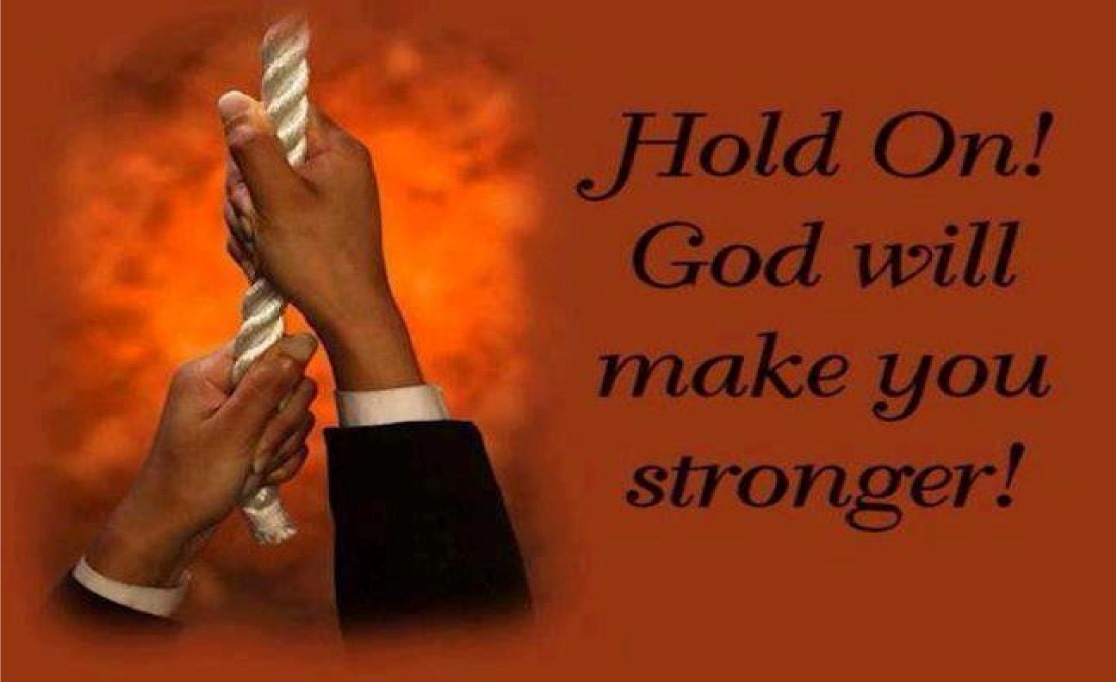
Do you ever have those moments where you just want to give up? What about a recent instance where you face a difficult situation? You feel that you have done all that you know to do and nothing seems to be working. And now you are at the end of your rope; at the point where you are just ready to give up? Don’t let go and give up, instead, “hang on.”
“Wait on the Lord: be of good courage, and he shall strengthen thine heart: wait, I say, on the Lord” (Psalm 27:14).
We are told not to be impatient, but instead to wait on the Lord for he will come to the rescue. When we place our hope in the Lord, we need to take heart and be strong as well. We also need to “be of good courage,” and when we do, God will strengthen our heart. This will help us to endure.
“But those who hope in the Lord will renew their strength. They will soar on wings like eagles; they will run and not grow weary, they will walk and not be faint” (Isaiah 40:31 NIV).
Most believers believe God to be an omnipotent or an all-powerful entity. By definition, God has certain innate capabilities and abilities that come with him being who he is.
“Unto thee it was showed, that thou mightest know that the Lord he is God; there is none else beside him” (Deuteronomy 4:35). “Know therefore this day, and consider it in thine heart, that the Lord he is God in heaven above, and upon the earth beneath: there is none else” (Deuteronomy 4:39). “Am I a God at hand, saith the Lord, and not a God afar off? Can any hide himself in secret places that I shall not see him? saith the Lord. Do not I fill heaven and earth? saith the Lord” (Jeremiah 23:23-24). “And I heard as it were the voice of a great multitude, and as the voice of many waters, and as the voice of mighty thunderings, saying, Alleluia: for the Lord God omnipotent reigneth” (Revelation 19:6).
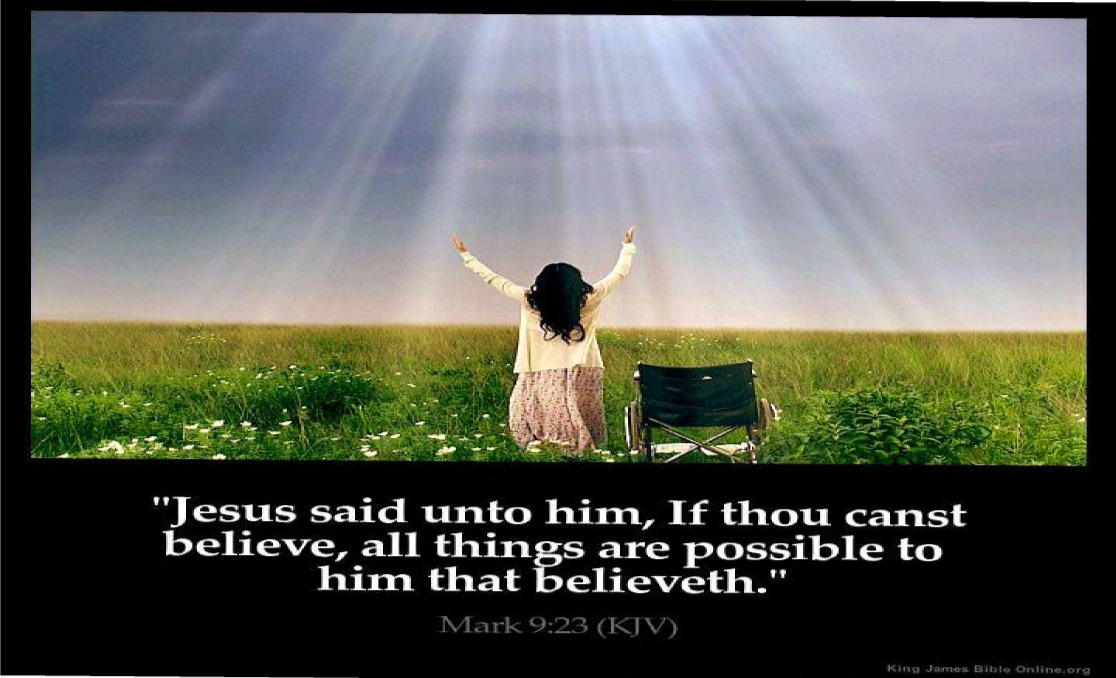
It has been said that the more thankful you are, the more you attract things to be thankful for. It has also been said that those who take life day by day, complain very little, and are thankful for the things in life are happy. Scripture tells us to “always give thanks for everything to our God and Father in the name of our Lord Jesus Christ” (Ephesians 5:20 TLB). Maybe this is why those who are thankful for the things they have in life are happy truly.
“Love not the world, neither the things that are in the world. If any man love the world, the love of the Father is not in him. For all that is in the world, the lust of the flesh, and the lust of the eyes, and the pride of life, is not of the Father, but is of the world. And the world passeth away, and the lust thereof: but he that doeth the will of God abideth for ever” (I John 2:15-17).
Scripture tells us that in the last days, there will be perilous times and that it will be very difficult to be a Christian. In those days, the scriptures say:

There is so much that was accomplished when Jesus died on the cross. Our redemption was just one of many things that Jesus accomplished on the cross.
“When Adam sinned, sin entered the entire human race. His sin spread death throughout all the world, so everything began to grow old and die, for all sinned (Romans 5:12 TLB). For this one man, Adam, brought death to many through his sin. But this one man, Jesus Christ, brought forgiveness to many through God’s mercy. Adam’s one sin brought the penalty of death to many, while Christ freely takes away many sins and gives glorious life instead. The sin of this one man, Adam, caused death to be king over all, but all who will take God’s gift of forgiveness and acquittal are kings of life (reign in life) because of this one man, Jesus Christ. Yes, Adam’s sin brought punishment to all, but Christ’s righteousness makes men right with God, so that they can live. Adam caused many to be sinners because he disobeyed God, and Christ caused many to be made acceptable to God because he obeyed” (Romans 5:15-19 TLB).
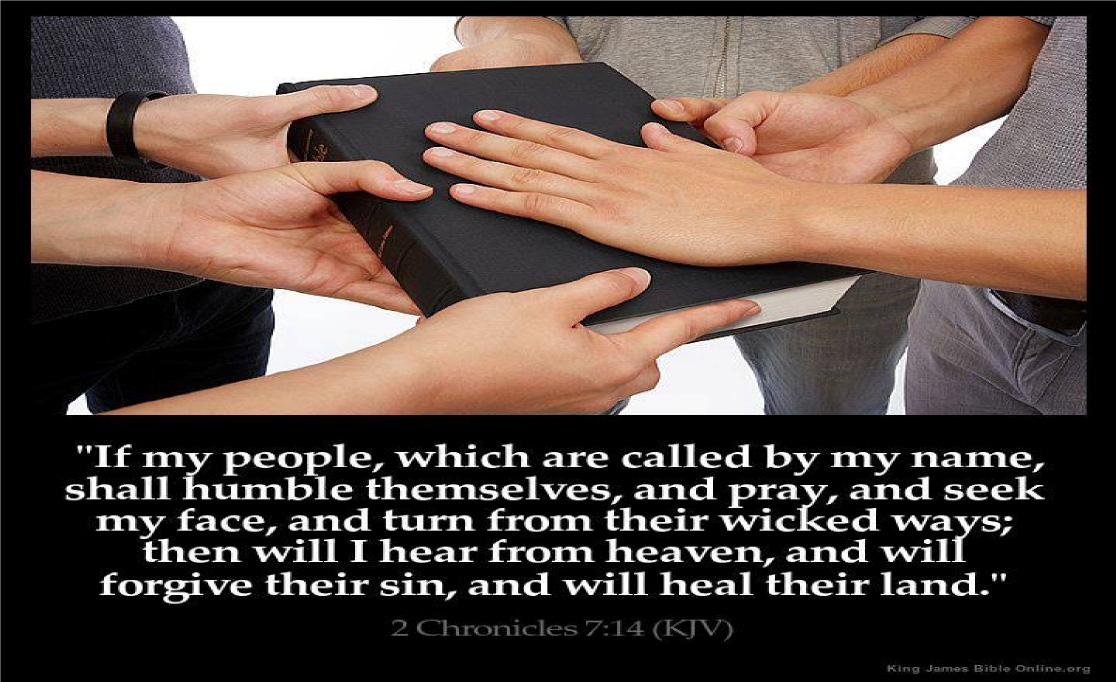
One night, after Solomon had finished building the temple where God would choose as the place of sacrifice, God appeared to Solomon and said:
“If my people, which are called by my name, shall humble themselves, and pray, and seek my face, and turn from their wicked ways; then will I hear from heaven, and will forgive their sin, and will heal their land” (II Chronicles 7:14).
God went on to tell Solomon that if the people, which are called by his name, would humble themselves and pray, search for him, seeking his face, and turn from their evil wicked ways, he would hear them from heaven and would forgive them of their sins. He would also heal their land. This appears to be a reoccurring theme with God.

A registered 501(c)(3) nonprofit organization
EIN 84-2866702.
Office Hours:
Meetings available upon request.
Get in Touch
Phone:
(540) 382-9132
Mailing Address:
Kingdom Worker Ministries
P. O. Box 33
Christiansburg, VA 24068-0033